


Teasing works because anticipation gives a scene shape. When everything happens immediately, there is no contrast between wanting and getting. A performer who slows the pace can make a glance, a small movement or a few seconds of eye contact carry more weight.
Eye contact makes the tease feel personal
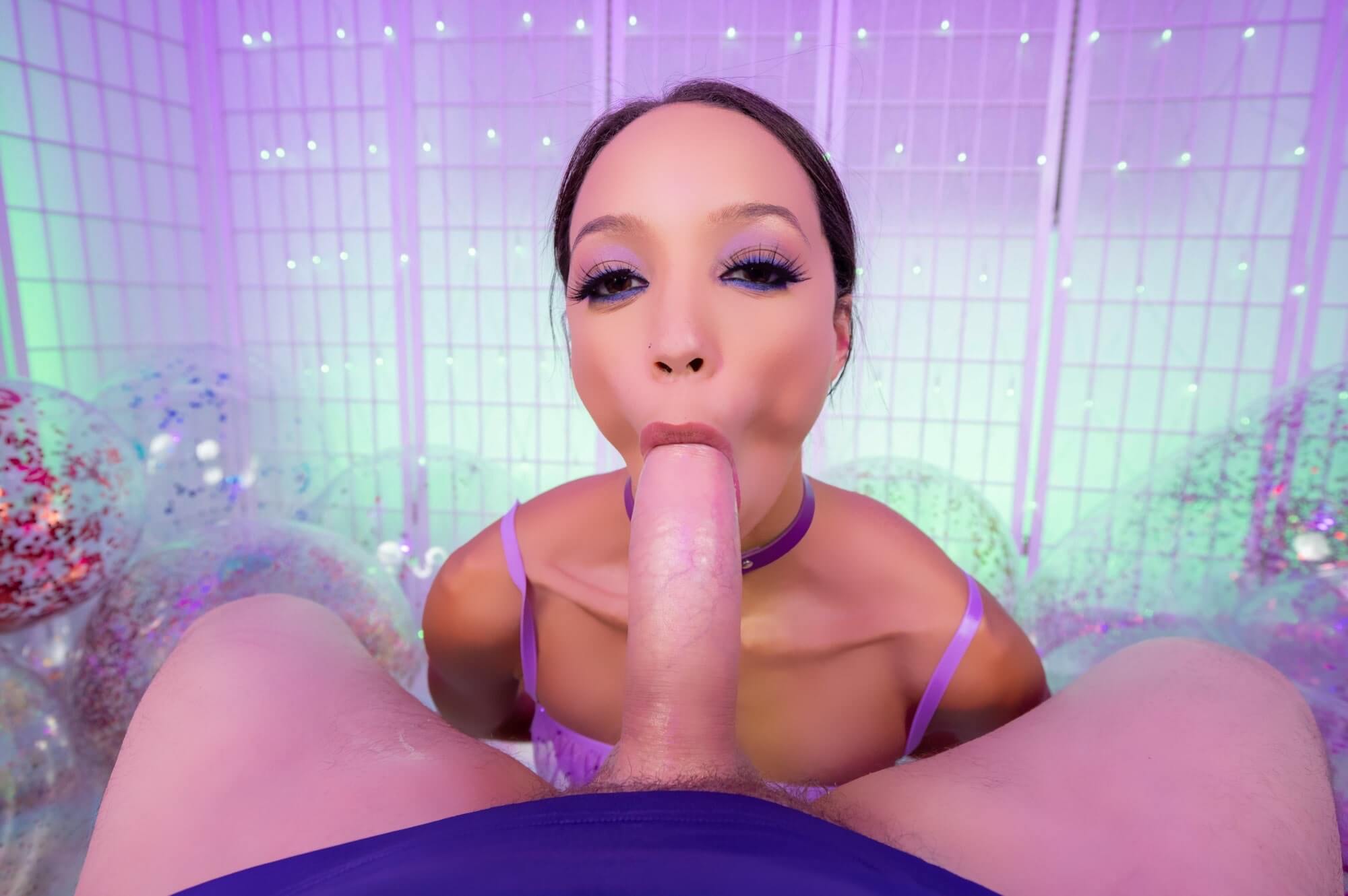
In first-person VR, the lens represents the viewer. When a performer looks directly into it and holds the gaze, the moment feels addressed to one person rather than a room. Looking away and returning to the camera can be more effective than constant movement.
Good teasing controls distance
Moving close to the camera creates intensity. Pulling back creates space and makes the next approach feel deliberate. Skilled performers use that distance without rushing or drifting outside the comfortable viewing area.
Solo scenes expose this skill especially clearly because there is no second performer to share the frame. Our guide to what makes solo VR exciting explains how attention and body language carry the entire scene.
Anticipation needs a payoff
A tease that never changes becomes repetitive. The performer should gradually increase intensity through movement, voice, proximity or a clear transition into the main act. The payoff feels stronger because the viewer has been given time to expect it.
Different performers tease differently
- Playful performers use smiles, jokes and quick changes in attention.
- Confident performers may slow everything down and make the viewer wait.
- Dominant teasing uses instructions and controlled denial.
- Intimate teasing relies on quiet speech, eye contact and small movements.
Use the performer directory to compare several scenes from the same model. Her timing and camera presence will tell you more than a thumbnail.
Teasing is not valuable because someone is withholding a particular act. It works because the performer controls attention. In a well-shot VR scene, that control turns a simple look or pause into part of the experience.


