


In a POV scene, a performer can hold your attention without changing the camera angle. A look into the lens, a pause before speaking, or a line delivered straight to the viewer makes the camera position feel deliberate. Those details matter more than a generic promise that a scene is “immersive.”
Whitney Wright: direct instructions
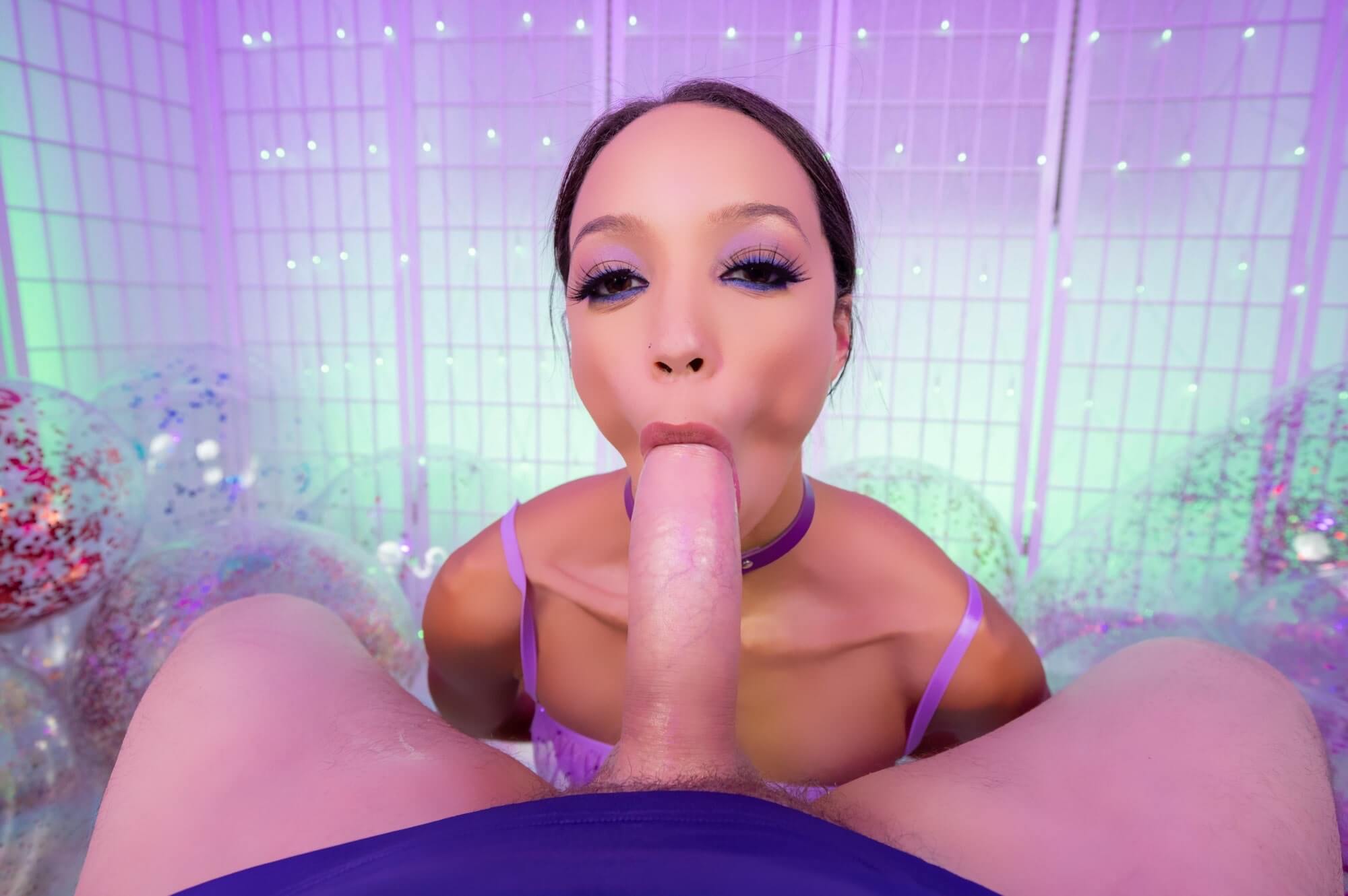
In Whitney Wright’s Love Passion Lollie scene, the lollipop and slow dancing set up a teasing opening. Whitney then takes a commanding tone and gives the viewer instructions before the scene moves into oral sex. That direct address is the point of the setup: she is playing to the person behind the lens rather than treating the camera as an observer. If that sort of interaction is what you look for, browse the JOI scenes rather than judging a video by its thumbnail alone.
Octavia Red: a softer conversation
Octavia Red’s Spicy Strawberry Licorice scene uses a different approach. The pink and black lingerie, close framing, and girlfriend-style attention make the opening feel more like an invitation than an instruction. Her attention stays with the viewer even as the scene picks up pace. The intimate VR tag is a useful way to look for more of that tone.
Choose the interaction, not only the act
Both scenes use the same basic POV idea, but one asks you to follow her lead while the other gives you room to settle into the moment. Watch the first minute of a trailer for eye contact, speech, and pacing. Those cues tell you more about how the scene will feel than a list of acts at the bottom of a page.


