


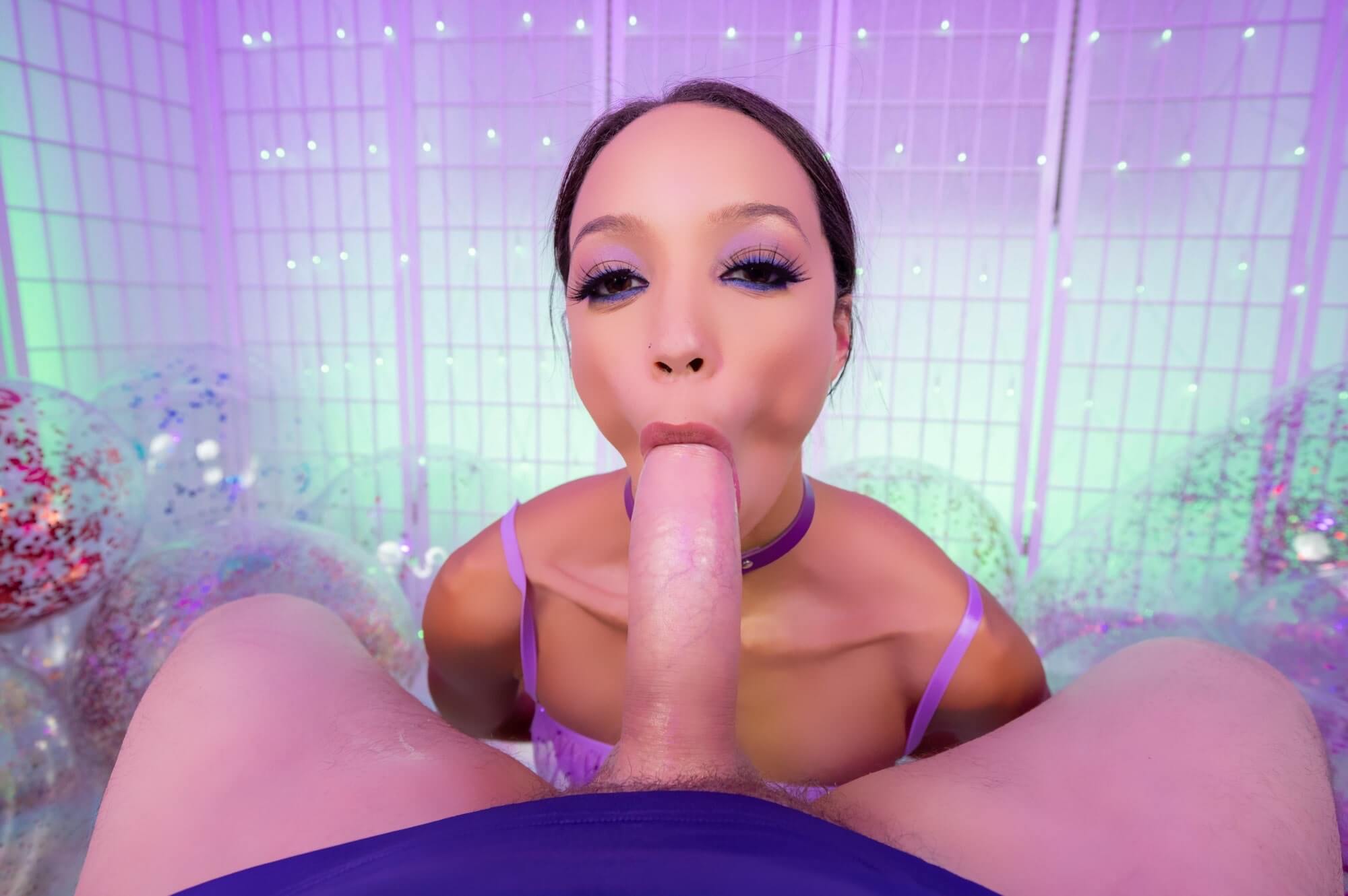





A two-performer VR scene has a simple challenge: both women need to feel present even when the camera is close. If one disappears from view for long stretches, the scene can play like two solo turns. When they keep reacting to each other, the viewer gets a different kind of encounter.
The POV threesome collection is a good place to see that difference. Pay attention to whether the performers share the frame, how they hand attention back and forth, and whether their chemistry continues when only one is closest to the camera.
Cooperation in the Close POV
In Lulu Chu and Alexia Anders: Mimosa Macarons, kissing and touch between the women are part of the scene from the first exchange. They alternate their attention to the viewer, but the other performer remains involved. The quiet mouth sounds and close framing make the small reactions easy to notice.
That is a useful reason to choose this scene if you want interaction among all three people in the fantasy. You can also visit Lulu Chu's performer page to compare her solo and shared appearances.
A More Competitive Rhythm
Hime Marie and Anna Claire Clouds's Peach Gummy Candy takes another route. Their kissing and chemistry remain important, but the description presents their shared attention as a playful competition. They trade places at the close POV rather than settling into one unchanging arrangement.
Watching these two scenes back to back makes a better comparison than treating “threesome” as a complete description. Both involve two women and a viewer perspective. The first leans into cooperation; the second makes the alternation itself part of the fun.
The Frame Has to Make Room for Both
In a solo POV scene, the performer can hold the camera's attention without sharing it. With two women, the viewer may look from one reaction to the other. Watch what happens when one moves closest to the lens: does the second keep touching, looking, or responding? The scene feels more connected when those small exchanges continue.
The answer can change from moment to moment. A brief solo focus can give one performer room to stand out; bringing both back together gives the shared scene its payoff. That rhythm is more revealing than the number of people on the title card.
What to Look For Before You Press Play
Check the listed performers and read the scene summary. If it mentions kissing, mutual touching, or reactions between the women, those details may matter as much as the explicit acts. A close POV can heighten that sense of presence, but it only works when the scene gives both performers a reason to stay involved.
Use the tag to find the format, then choose by chemistry and pace. Those are the details that make one two-performer scene feel different from another.


